The way we access mental health support is changing. Once limited to traditional, in-person appointments, therapy has become increasingly accessible thanks to the rise of online services.
Whether it’s through video calls, phone sessions, or messaging platforms, online therapy offers a flexible and convenient way to receive support—especially for those who may find face-to-face sessions intimidating, inaccessible, or logistically difficult.
But how exactly does online therapy work? What can you expect, and how can you make sure you’re getting the most from it? If you’re considering virtual mental health support, this guide will walk you through the process, the benefits, and what to keep in mind when choosing a service or therapist.
What Is Online Therapy?
Online therapy—also known as teletherapy, virtual therapy, or e-therapy—is the delivery of mental health services over the internet. This can take place via:
- Video calls (similar to in-person sessions, but remote)
- Phone calls
- Live chat or instant messaging
- Email or asynchronous messaging
Some therapists offer a combination of these formats, depending on your needs and preferences.
How Does Online Therapy Work?
The process of online therapy is similar to traditional therapy, with a few differences in how sessions are conducted and how you interact with your therapist. Here’s a breakdown of what you can expect:
Choosing a Platform or Therapist
You can access online therapy through:
- Private therapists who offer remote sessions
- Online therapy platforms (e.g., BetterHelp, onlinetherapyuk.co.uk, or other UK-based services)
- NHS services or local charities that provide virtual appointments
You’ll typically be able to read about the therapist’s qualifications, specialisms, and approach before booking a session. Some services match you with a therapist based on a short questionnaire.
Booking and Preparing for a Session
Once you’ve chosen a therapist or platform, you’ll:
- Select a time and date for your session
- Receive a link or instructions for accessing the session (via Zoom, Skype, or a dedicated platform)
- Complete any initial forms or assessments—this may include questions about your mental health history, current challenges, and goals
Before your session, it’s a good idea to:
- Find a quiet, private space where you won’t be interrupted
- Make sure your device is charged and internet connection is stable
- Test your camera and microphone if using video
The First Session
Your first session is often focused on:
- Getting to know your therapist
- Discussing your reasons for seeking therapy
- Setting goals or identifying the areas you’d like to work on
- Asking any questions you have about the process
It’s also a chance to see how you feel speaking with the therapist and whether you’re comfortable with their approach.
Ongoing Sessions
Subsequent sessions will focus on:
- Exploring your thoughts, feelings, and behaviours
- Identifying patterns or triggers
- Developing coping strategies and tools for emotional resilience
- Monitoring progress towards your goals
The format and frequency of sessions will depend on your needs—some people attend weekly, others fortnightly, and some less frequently after initial progress.
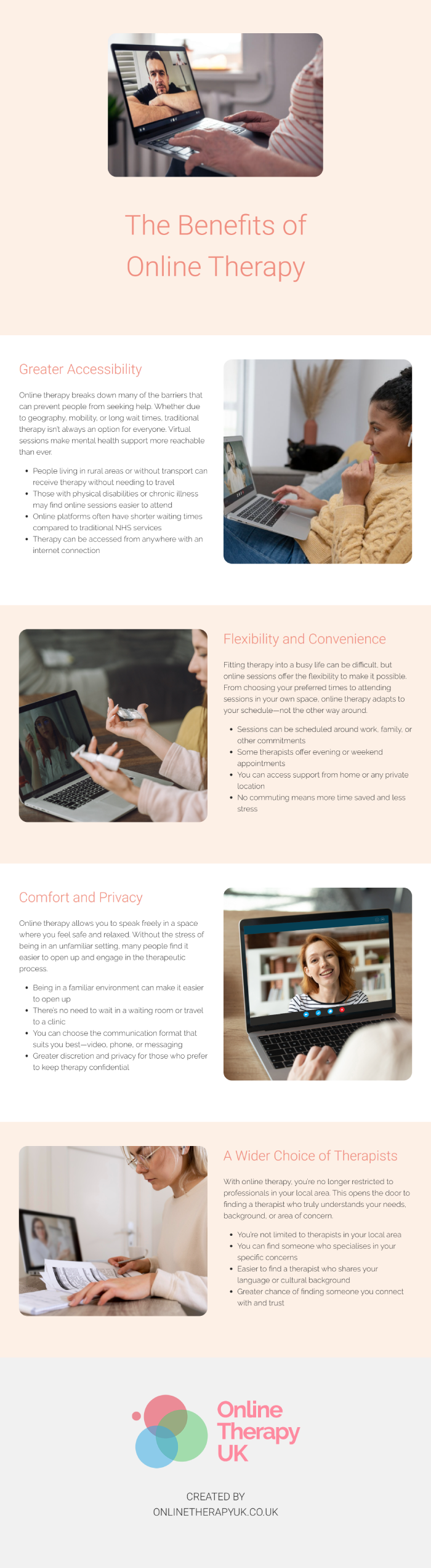
Benefits of Online Therapy
Online therapy offers a number of advantages, especially for those who might otherwise struggle to access support.
Greater Accessibility
- People living in rural areas or without transport can receive therapy without needing to travel
- Those with physical disabilities or chronic illness may find online sessions easier to attend
- Online platforms often have shorter waiting times compared to traditional NHS services
Flexibility and Convenience
- Sessions can be scheduled around work, family, or other commitments
- Some therapists offer evening or weekend appointments
- You can access support from home or any private location
Comfort and Privacy
- Being in a familiar environment can make it easier to open up
- There’s no need to wait in a waiting room or travel to a clinic
- You can choose the communication format that suits you best—video, phone, or messaging
A Wider Choice of Therapists
- You’re not limited to therapists in your local area
- You can find someone who specialises in your specific concerns
- Many platforms offer therapist matching services to help you find a good fit
Common Types of Therapy Offered Online
Most major therapeutic approaches can be delivered effectively online. Some of the most common include:
Cognitive Behavioural Therapy (CBT)
CBT focuses on identifying and changing negative thought patterns and behaviours. It’s particularly effective for anxiety, depression, and stress, and is often used in structured, short-term formats.
Person-Centred Therapy
This approach is based on empathy, acceptance, and helping you explore your feelings at your own pace. It’s useful for personal growth, self-esteem, and emotional support.
Mindfulness-Based Therapy
Incorporates mindfulness techniques to help manage anxiety, stress, and rumination. Often used alongside other approaches such as CBT or ACT.
Psychodynamic Therapy
Explores how past experiences and unconscious patterns influence present behaviour. Often used for longer-term self-exploration and emotional insight.
Trauma-Informed Therapy and EMDR
Specialist approaches for people dealing with trauma, including EMDR (Eye Movement Desensitisation and Reprocessing), which can be adapted for virtual sessions.
Is Online Therapy Effective?
Yes. Research shows that online therapy is as effective as in-person therapy for many issues, including:
- Depression
- Anxiety disorders
- PTSD
- Relationship difficulties
- Stress and burnout
A number of studies have found that therapeutic outcomes—such as symptom reduction and client satisfaction—are comparable between online and face-to-face formats, provided the therapy is delivered by a trained professional using evidence-based methods.
Things to Consider Before Starting Online Therapy
Privacy and Confidentiality
Make sure your therapist uses a secure, encrypted platform that complies with data protection laws.
Choose a private space for your sessions and consider using headphones for extra privacy.
Your Preferences and Comfort Level
Some people feel more connected when speaking face-to-face, even virtually. Others may prefer messaging or phone-based support. Think about what format suits you best.
Technology and Accessibility
Check that your device and internet connection are reliable. If you’re not confident with technology, ask your therapist for a quick run-through before your first session.
Cost and Affordability
Online therapy can be more affordable than in-person sessions, but prices vary.
Some services offer sliding scale fees, while others work with insurance or offer packages.
Free or low-cost options may be available through charities or community mental health services.
What to Do If It’s Not Working for You
It’s normal to need a few sessions to settle in and get comfortable. But if you consistently feel:
- Disconnected from your therapist
- Unclear about your goals
- Unsure whether therapy is helping
…it may be worth discussing your concerns. A good therapist will welcome this feedback and explore how to adjust the process. If needed, you can also consider switching therapists or trying a different approach.
Therapy should feel safe, supportive, and collaborative—even when it’s challenging.
Online Therapy for Specific Situations
Work-Related Stress and Burnout
Online therapy can offer timely support for those overwhelmed by work, especially if you’re working remotely or struggling to maintain boundaries.
Relationship Issues
Many therapists offer couples counselling via video call. It can be especially helpful for long-distance couples or those with differing schedules.
Anxiety and Panic Attacks
CBT and mindfulness-based approaches work well online, and virtual therapy can help you apply techniques in real-life settings, such as your home or workplace.
Trauma and PTSD
With a trauma-informed therapist, online sessions can help you build safety and process trauma gradually, at your own pace.
How to Get Started with Online Therapy in the UK
Through the NHS
- Some NHS services offer virtual CBT or counselling
- You can self-refer through IAPT (Improving Access to Psychological Therapies) in many areas
- Waiting times can vary
Through Private Therapists
- Search through directories such as the BACP or UKCP
- Many therapists now offer online sessions
- Costs range from £40–£100 per session, depending on location and specialism
Through Online Therapy Platforms
- Sites like onlinetherapyuk.co.uk connect clients with UK-registered therapists
- You can choose between video, phone, or messaging
- Some offer free consultations or subscription models
Final Thoughts
Online therapy is a flexible, effective, and increasingly popular option for accessing mental health support. Whether you’re managing anxiety, coping with loss, navigating a relationship issue, or simply wanting to understand yourself better, virtual therapy can offer the same level of care and support as in-person sessions.
By choosing the right format, finding a qualified therapist, and being open to the process, you can get the help you need—wherever you are. Therapy doesn’t have to happen in a clinic or office. It can happen in your living room, on your lunch break, or wherever you feel safe and comfortable.
Mental health support is now more accessible than ever—and online therapy is helping to ensure that no one has to face their struggles alone.